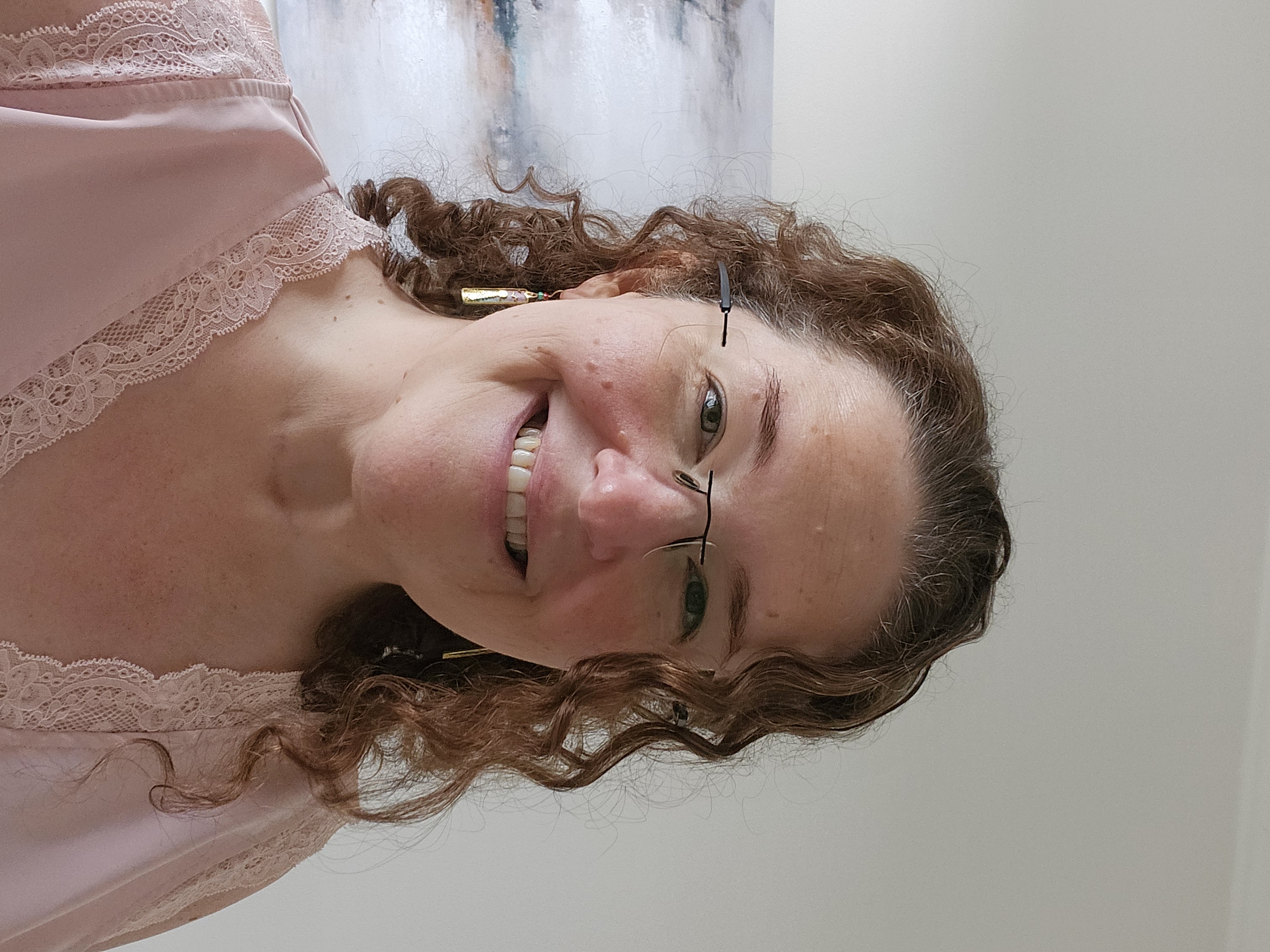
Kelly Ledford, MS, LPC, ATR
Somatic trauma therapy certified
ACCEPTING NEW CLIENTS
Individuals, Families & Teen Counseling (ages 5+)
Kelly completed her BA at Kennesaw University and earned her Master of Science in Counseling and Art Therapy from Springfield College. Kelly uses a variety of approaches including CBT, DBT, Motivational Interviewing, Somatic and Expressive modalities. She has gained over the years experience in working effectively with individuals to address trauma, anxiety, shifting through life transitions, chronic pain, and increasing ability to manage emotional regulation. Kelly works with adults, adolescents, and younger children who are at least 5 years old and she invites all individuals into her physical or virtual office to explore life together.
Healing Beyond Words: The Power of Art Therapy
Traditional talk therapy can sometimes fall short when emotions are too complex for words. Art therapy bridges this gap by using creative expression to access, process, and heal deep-seated psychological wounds.
What is Art Therapy?
Art therapy is a mental health profession that combines psychological theory with creative practice. Guided by a credentialed art therapist, individuals use materials like paint, clay, and markers to explore their inner thoughts. You do not need any artistic talent or skill to benefit from this practice; the focus remains entirely on the process of creation rather than the final product.
Key Psychological Benefits
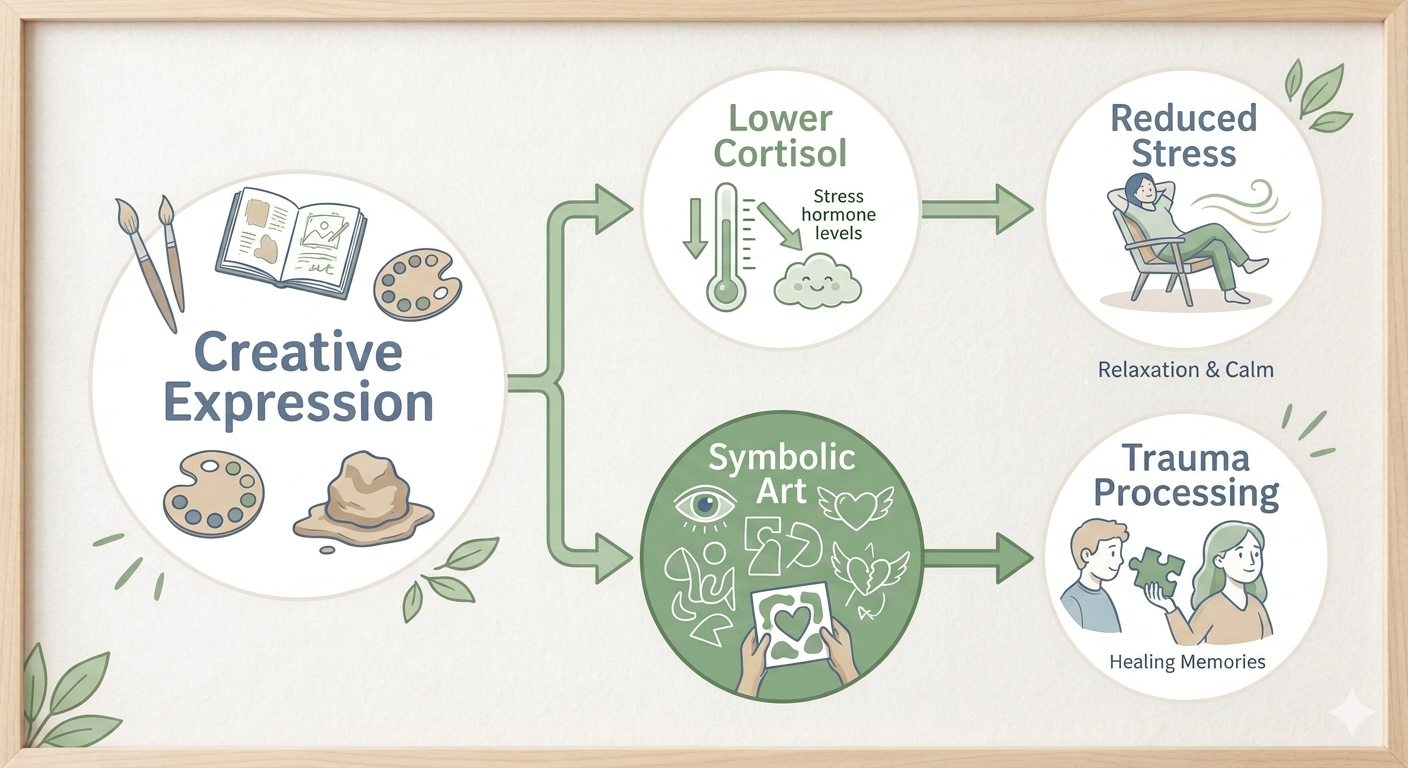
- Reduces Stress and Anxiety: Creating art lowers cortisol levels and activates the parasympathetic nervous system to induce deep relaxation.
- Processes Complex Trauma: The brain stores traumatic memories visually. Art therapy accesses non-verbal regions of the brain to safely externalize painful experiences.
- Improves Emotional Regulation: Translating raw emotions into tangible, visual forms helps individuals gain distance, perspective, and control over their feelings.
- Boosts Self-Esteem: Completing a piece of art provides a powerful sense of autonomy, mastery, and personal accomplishment.
- Enhances Self-Discovery: The subconscious mind often reveals hidden insights through symbols, colors, and metaphors chosen during the creative process.
Common Techniques and Practices
- Free-Association Drawing: Sketching without a planned design to unlock immediate subconscious thoughts and moods.
- Clay Sculpting: Using tactile materials to physically vent anger, grief, or physical tension.
- The Guided Mandala: Drawing within a circular frame to establish a sense of safety, centering, and emotional containment.
- Collage Making: Cutting and pasting existing images to reconstruct identity or visualize future personal goals.
What is DBT?
Dialectical Behavior Therapy (DBT) is a highly effective, evidence-based form of cognitive behavioral therapy designed to help people manage intense emotions, build healthier relationships, and create a life worth living.
This comprehensive guide breaks down what DBT is, how it works, and how it can help you or your loved ones regain emotional balance.
What is Dialectical Behavior Therapy (DBT)?
DBT was originally developed in the late 1980s by psychologist Marsha M. Linehan. Dr. Linehan created it to treat borderline personality disorder (BPD) and chronic suicidal behavior. Today, it is widely used to treat a variety of complex mental health conditions.
The word “dialectical” means holding two seemingly opposing ideas at the same time. In DBT, those two opposing concepts are acceptance and change:
- Acceptance: Validating your current emotions, thoughts, and behaviors exactly as they are in this moment.
- Change: Recognizing that you must learn new skills to change unhealthy behaviors and improve your life.
Instead of fighting your reality, DBT teaches you to accept your current situation while simultaneously working hard to change it.
The 4 Core Skill Modules of DBT
DBT is not just a talking therapy; it is a skills-based treatment. Therapy typically includes individual sessions and a skills group where you learn four specific behavioral modules:
1. Mindfulness
- What it is: The practice of being fully present in the current moment without judgment.
- How it helps: It anchors you to the “here and now,” helping you slow down and observe your thoughts and feelings without immediately reacting to them.
2. Distress Tolerance
- What it is: Techniques to get through a crisis without making the situation worse.
- How it helps: It teaches you how to tolerate intense pain or emotional crises using distraction, self-soothing, and radical acceptance when you cannot immediately change the situation.
3. Emotion Regulation
- What it is: Strategies to manage, navigate, and change intense emotions.
- How it helps: It helps you identify your emotions, reduce your vulnerability to “emotional storms,” and decrease negative feelings.
4. Interpersonal Effectiveness
- What it is: Tools to communicate clearly, set boundaries, and maintain healthy relationships.
- How it helps: It teaches you how to ask for what you need, say “no” assertively, and handle conflict while keeping your self-respect and your relationships intact.
How DBT Can Help You
If you feel like your emotions dictate your entire life, DBT offers a structured roadmap to stability. Here is how it can transform your mental health:
- Reduces Impulsive Behaviors: It replaces self-destructive habits (like self-harm, substance abuse, or binge eating) with healthy coping mechanisms.
- Stops Emotional Overwhelm: It short-circuits the “fight-or-flight” response, preventing small stressors from escalating into massive crises.
- Improves Relationships: It gives you concrete communication tools to eliminate toxic patterns and express your needs without pushing people away.
- Validates Your Experience: It provides a compassionate environment where you learn that your feelings are valid, even if your reactions need to change.
Who Can Benefit From DBT?
While initially created for BPD, extensive research shows that DBT is highly successful for treating:
- Major Depressive Disorder (MDD)
- Generalized Anxiety Disorder (GAD)
- Post-Traumatic Stress Disorder (PTSD)
- Eating disorders (Bulimia and Binge Eating Disorder)
- Substance use disorders
Take the Next Step Toward Balance
You do not have to be controlled by your emotions forever. DBT provides the tangible, actionable skills you need to navigate life’s inevitable ups and downs with confidence and peace.

Looking for more information on teen counseling at Fresh Air Counseling?
Office Hours
In person and virtual sessions are available on Mondays and Wednesdays
Virtual sessions are available on Wednesdays